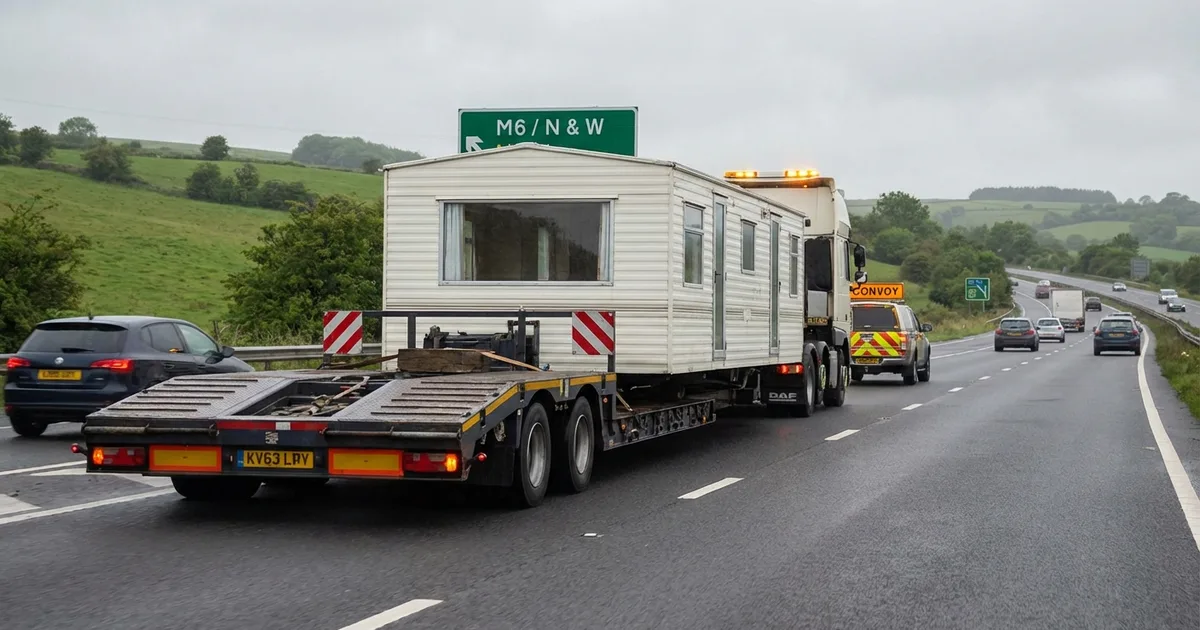
Ask most websites how much it costs to move a static caravan and you’ll get a non-answer: “costs vary depending on size and distance.” True, and completely useless if you’re trying to budget for a move.
So here are the numbers. A standard 10ft-wide single unit costs £1,500 to £3,000 for transport. Twin units or long-distance moves push past £5,000. Add disconnection at your current park and siting at the new one, and most people pay £2,500 to £5,000 all in.
The exact figure depends on the width of your caravan, the distance it needs to travel, the route complexity, and how much work is needed at each end. This guide breaks down every cost component line by line, with a regional pricing table and real figures from UK operators, so you can build an accurate budget before you request a single quote.
Static Caravan Moving Cost: Quick Answer
If you just need a number: budget no less than £1,000 even for a short local move (Ripe Insurance gives this as their floor). At the lowest end, transport starts from around £700 plus VAT for a straightforward short-distance job (Tingdene’s published starting price). One operator, DeliverMyMotor, quotes from £2.50 per mile with a £250 minimum.
For the full picture, add disconnection and siting charges on top of transport. A realistic all-in budget for a typical move is £2,500 to £5,000. Twin units or lodges being moved long-distance can exceed £5,000 plus VAT for haulage alone.
But that top-line figure is only part of the bill. The full cost stack looks like this. (New to the process itself? Our static caravan transport guide walks through how a move actually works, end to end.)
The Full Cost Stack: What You’re Actually Paying For
Most people who get a nasty surprise at the end of a static caravan move underestimated the disconnection and siting fees, not the haulage. The transport quote is one line item in a bill that has four or five.
Disconnection and de-siting at your current park
This is charged by the park you’re leaving, not by your haulier. It covers disconnecting gas, electricity, water and sewage, removing steps, skirting and decking, and returning the pitch to a clean state. Expect to pay £200 to £800 depending on the park and how much infrastructure surrounds your unit. Some parks charge a flat de-siting fee. Others itemise each service separately.
Your haulier’s quote will not include this cost. You need to arrange it directly with the park.
Haulage (transport from A to B)
This is the main line item and the one with the widest variation. See the sections below for a full breakdown by width and distance.
Permit and escort fees
Every static caravan transported on UK roads is classified as an abnormal load under the Special Types General Order (STGO) regulations. Your haulier must notify every police force along the route, typically through the ESDAL (Electronic Service Delivery for Abnormal Loads) system. This notification cost is usually included in the transport quote.
Escort vehicles are required for caravans over 2.9 metres wide, which covers most static caravans on certain road types. One escort is usually bundled into the quote. A second escort for very wide loads adds approximately £300 to £600 per vehicle per day if it is not already included. Always ask your haulier whether escort costs are covered or charged separately.
Siting at the destination
The new park or landowner charges for levelling, blocking, connecting services (gas, electric, water, sewage) and installing steps or skirting. This typically costs £300 to £1,500 depending on the site and whether services are already in place. A pitch with pre-installed connections will be at the lower end. A private plot with no existing services will be at the higher end or beyond.
Optional extras
If your caravan needs temporary storage between sites, that is an additional cost. Long-standing caravans may also incur ground repair charges at the old pitch, and any decking or verandas will need to be removed before transport and rebuilt at the destination.
The haulage is where the biggest variation lives. The two factors that matter most are width and distance.
Cost by Caravan Width
Width is the single biggest factor in static caravan transport cost. It determines the permit requirements, whether escort vehicles are needed, and whether some operators will take the job at all.
10ft wide (standard)
Most single-unit static caravans are 10ft wide. This is the baseline pricing tier. For a standard move of 50 to 100 miles, expect £1,000 to £1,500 for transport alone. The regional table in the next section shows destination-specific figures. At this width, standard STGO notifications apply and a single escort vehicle is typically sufficient.
12ft wide
A 12ft-wide caravan requires additional permits and usually needs an escort vehicle. Police clearance must be obtained through every force area on the route. As a rule of thumb, add approximately 20% to 10ft prices to estimate 12ft-wide transport costs.
Twin units and lodges
Twin units or lodge-style caravans require full STGO Category abnormal load notification. Escort vehicles are mandatory. Costs can exceed £5,000 plus VAT for long-distance moves. Some transport operators decline twin units altogether because of the specialist equipment and route planning involved. If you own a twin unit, confirm that any operator you approach actually handles them before requesting a quote.
Once you know your width bracket, the next variable is distance.
Cost by Distance: What You’ll Pay From Across the UK
Transport pricing starts from approximately £2.50 per mile for a 10ft-wide caravan, with a minimum charge of around £250. That per-mile rate comes from DeliverMyMotor and represents a haulage-only floor price before any site fees. Complex routes, wider caravans and peak-season demand will push it higher — our full per-mile rate table by caravan width breaks down what each size pays per distance band.
As a rough guide, here are the distance bands:
- Local (under 30 miles): £300 to £1,000
- Regional (30 to 100 miles): £750 to £1,500
- Long-distance (100+ miles): £1,500 to £2,500
- Scotland, Southwest England or remote areas: expect a surcharge on top
For more specific figures, here is a regional pricing table from Premier Caravans, based in North Wales. These are published prices for 10ft-wide caravans. Your actual quote will vary depending on your origin location, but the relative differences between destinations are a useful guide.
| Destination | Approximate Cost (10ft wide) |
|---|---|
| Local (North Wales) | £300 to £1,000 |
| Manchester / Liverpool | £750 |
| Blackpool / Yorkshire / Hull / Cumbria | £1,250 |
| Mid Wales / Birmingham / Gloucester | £1,500 |
| South Wales / Portsmouth / Devon / London / Cornwall | £2,000 |
| Scotland | £1,750 to £2,500 |
Source: Premier Caravans, based from North Wales. Prices are indicative and will vary by operator and origin point.
For 12ft-wide caravans, add roughly 20% to these figures. Twin units will be quoted individually and can exceed the top of these ranges significantly.
What Pushes the Cost Higher
A move into a tight caravan park with a narrow entrance, soft ground, or trees overhanging the access road can add hundreds to the bill. Some operators will charge for a site survey before they even confirm a price. By contrast, a caravan going onto a clear, level hardstanding pitch on private land is about as straightforward as it gets.
Multiple police force crossings add administrative work. A move that crosses three or four county boundaries means three or four separate ESDAL notifications, each with its own scheduling window. Longer routes through more force areas tend to cost more.
Remote locations attract surcharges. Moves into the Scottish Highlands, Northern Ireland, or the far Southwest of England cost more because of the additional distance and limited return-load opportunities for the haulier.
Time of year matters more than most people expect. Summer and school holidays are peak season for caravan transport. Operators have full schedules and little reason to negotiate. If your move is flexible, booking in autumn or early spring can save you 10% to 15%.
Finally, a very wide load that requires two escort vehicles rather than one will see an additional £300 to £600 per day on top of the base quote.
Moving to a Park vs. Private Land
Costs differ depending on whether your caravan is going to a holiday park pitch or a private plot of land.
Park pitch: the destination park handles siting, levelling and service connections for a flat fee (typically £300 to £1,500). The process is standardised and the infrastructure is already there. The catch is the park’s age restriction. Most UK holiday parks cap units at 10 to 20 years old. If your caravan doesn’t meet their limit, they won’t accept it.
Private land: you avoid the park’s siting fee entirely, but you may need to arrange groundwork yourself. If the plot has no existing services, connecting mains water, electricity and drainage can cost well beyond the £1,500 park siting ceiling. You’ll also need to check whether planning permission is required for a static caravan on your land. The transport cost itself is the same either way.
Is It Worth Moving? When to Move vs. When to Sell
Not every caravan is worth relocating. Before you commit to a move, run through these checks.
If your unit is under 15 years old, in good structural condition, and the move is under 100 miles, the transport cost is a fraction of what the caravan is worth. You’ll get years of use at the new location. That’s a move worth making.
Be cautious if the caravan is approaching 15 years old. Most UK holiday parks impose age restrictions, typically capping units at 10 to 20 years. A caravan near or past that limit may not be accepted at the new park, which makes the entire transport cost a write-off. Always confirm with the destination park before you book anything.
If the total move cost (haulage plus disconnection plus siting) exceeds the caravan’s resale value, sell it instead. A unit over 20 years old with an all-in move bill heading toward £3,000 rarely makes financial sense to relocate.
The most important step before booking transport is to confirm with the destination park that they will accept your unit. Age restrictions are the most common reason a planned move falls through after money has already been spent on disconnection.
How to Get an Accurate Quote
To give you a reliable price, any transport operator will need the following information:
- Caravan make, model and year
- Width (10ft, 12ft, or twin unit)
- Current location (postcode)
- Destination location (postcode)
- Whether the destination is a holiday park or private land
- Any known access constraints at either end (narrow lanes, gates, soft ground)
Get at least two or three quotes. Prices vary between operators, and a lower price sometimes means escort fees or permit costs are excluded. The question to ask every operator is: “Does this quote include all compliance and escort costs, or are there additional charges?” A quote that bundles everything, including crane hire if needed and a guaranteed move date, is usually better value than one that looks cheaper upfront but adds extras later.
You can get a quote from Static Caravan Movers UK by filling in the form on our homepage. We cover moves across England, Scotland and Wales, and our quotes include all standard permit and escort fees.
Your Next Step
Most static caravan moves cost between £2,500 and £5,000 all-in once you account for disconnection, transport and siting. The transport element alone runs £1,500 to £3,000 for a standard 10ft-wide unit. Twin units, long distances and difficult access push costs higher. The regional pricing table above gives you a solid starting point for budgeting.
If you know your caravan’s width and both postcodes, you can get an accurate price today. Request a free quote from Static Caravan Movers UK and we’ll come back to you with a clear, all-inclusive figure.